Overview
The MPK community’s ancestors have lived within an approximately 1,000-hectare ancestral domain since before Spanish colonization. The area includes landmarks central to community culture and survival: Salagapon Falls, a ritual area; Banban, a sacred burial place; and Karikayanan, a source of food and medicinal plants, and an area traditionally used for hunting and fishing.
In 1986, the ancestral land was placed under the control of Kiantig Development Corporation (KDC) through an arrangement involving the government’s environment agency. After the Indigenous Peoples’ Rights Act of 1997 was enacted, the community pursued formal recognition of its ancestral domain. The process was marked by prolonged administrative delays and allegations of threats, intimidation, and violence.
The government arrangement involving KDC reportedly expired in 2018. In 2023, the MPK community was granted CADT No. 261. However, the community has not been able to take effective possession of the land. Government agencies have cited inconsistencies or overlap in technical descriptions and have required further administrative action, including an amended map and a Certificate of Non-Overlap.
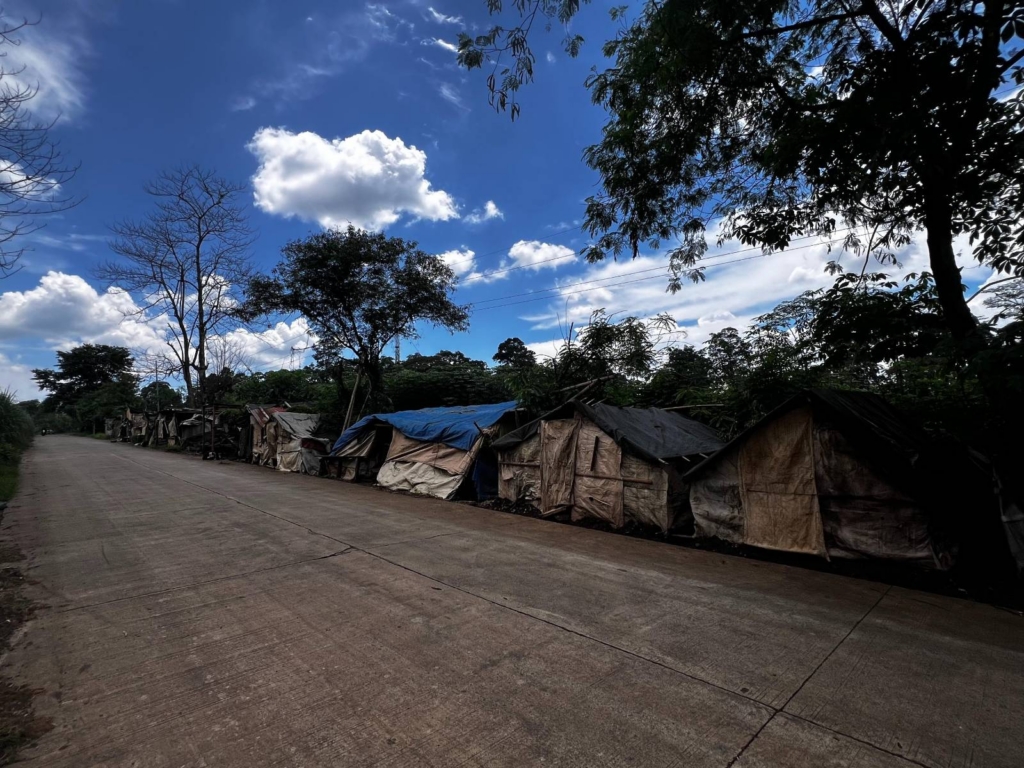
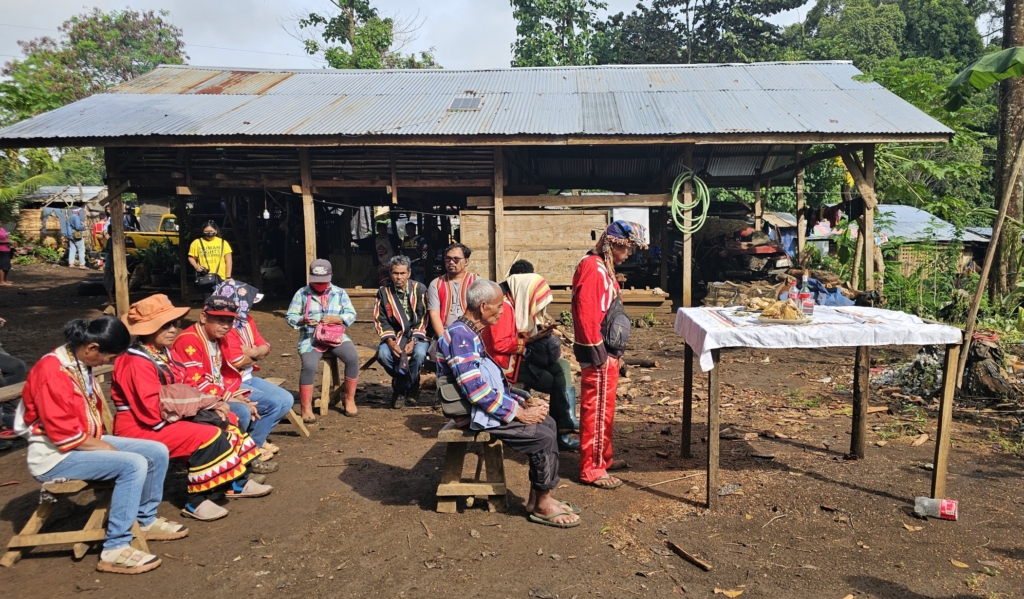
Conditions at the temporary highway settlement remain unsafe. Community members report inadequate access to food, clean water, health services and land suitable for farming. Children face health and road safety risks. Threats and intimidation also continue to affect community leaders.
Decades-long struggle for their land
The MPK ICC’s ancestral domain in Kianteg, Quezon, Bukidnon was placed under the control of Kiantig Development Corporation (KDC) (formerly known as Cesar Fortich Incorporated) through Forest Land Graze Lease Agreement (FLGMA) No. 122 with the Department of Environment and Natural Resources (DENR). This agreement will expire on 31 December 2018. The indigenous community did not give their free and prior informed consent.
5 July 1998: Manobo-Pulangiyon filed a Certificate of Ancestral Domain Claim (CADC) with NCIP to establish legal ownership over the area.
MPK community members were driven from their homes, displaced, and forced to reside in shacks along the roads of Butong, Quezon
1 February 2019: With the FLGMA expired in 2018, exclusive jurisdiction of the area was turned over to the National Commission on Indigenous Peoples (NCIP). The commission issued notice to the occupying corporation to immediately vacate the land. Despite this, operations continue uninterrupted.
From 2019 – 2022: During this period, MPK attempted to repossess their ancestral domain on two occasions while continuously engaging with the NCIP. The community members suffered threats and harassment, reportedly from the corporation’s private guards.
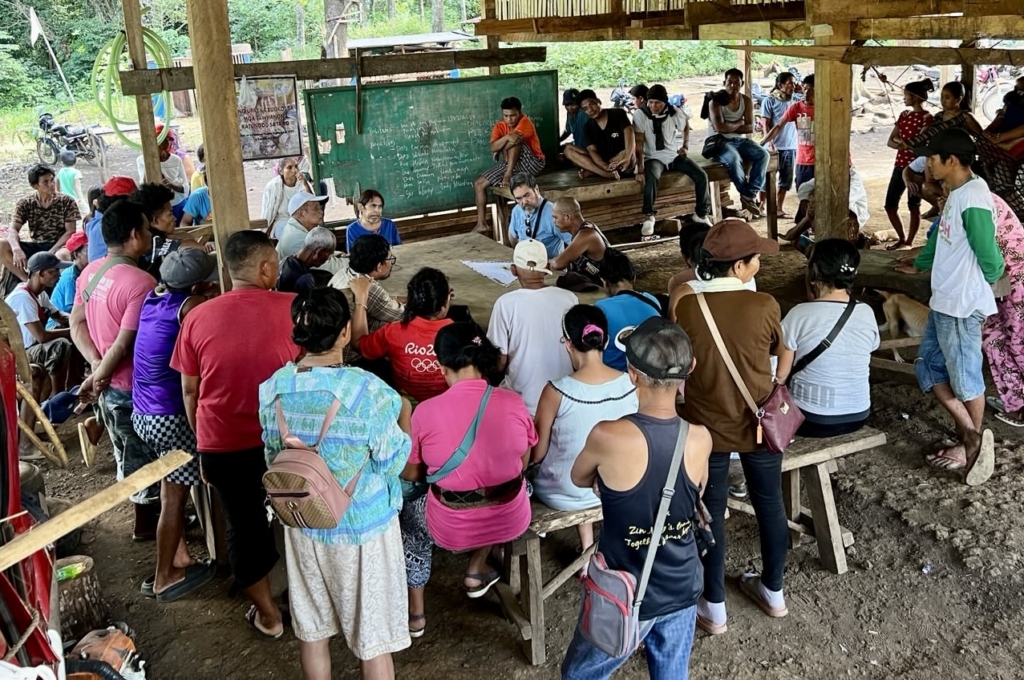
19 April 2022: Presidential candidate Leody de Guzman came to speak with the MPK ICC. While standing in a part of the then contested area, gunshots were fired from a close distance, injuring four community members and an individual from de Guzman’s team. An investigation was launched by local officials, and resolutions were filed in both houses of Congress regarding the incident.
September 2022: MPK traveled to Manila to engage with government agencies at the national level. They called for a safe and peaceful return to their land.
13 January 2023: Manobo-Pulangiyon Kiantig was finally given the Certificate of Ancestral Domain Title (CADT) no. 261, lawfully certifying their ownership of approximately 1,100 hectares of their ancestral domain. A copy was officially turned over to the community in August of the same year.
19 October 2023: The tribe held a personal dialogue with the Commission’s Chairperson to discuss their CADT registration status, security threats, and ways forward for their peaceful reinstatement. It was agreed that interagency meetings will be called to plan these in detail. No progress in their reinstatement was made, and the community continually faced threats from the occupying corporation and potential demolitions of their residences.
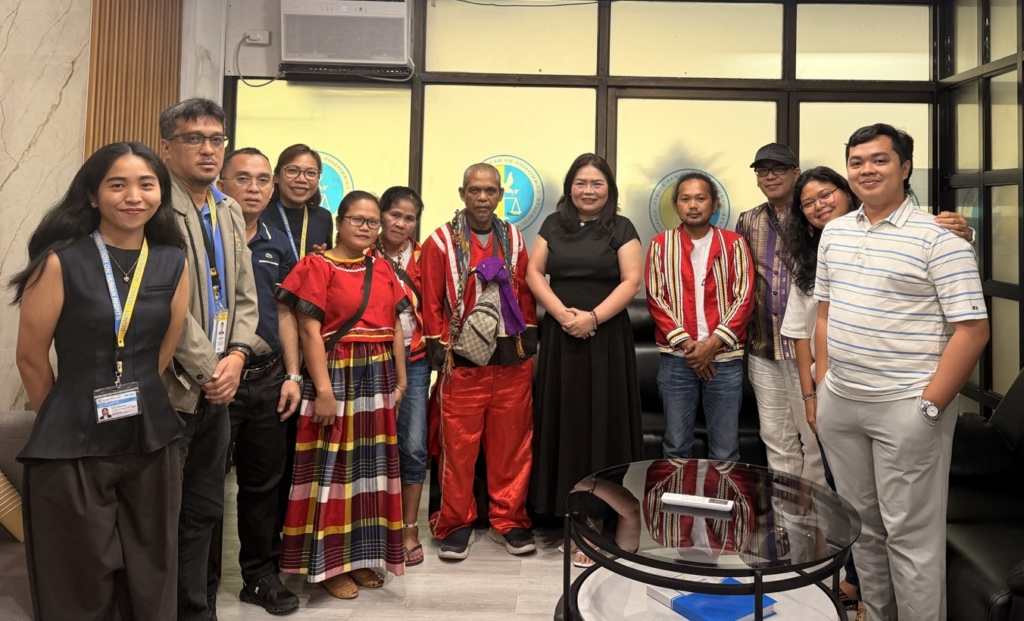
The MPK ICC declared their intent to repossess and enter their ancestral land. They sent letters to the government to give them due notice of their decision, and to request protection and assistance during the repossession event scheduled on October 21. These letters were received by the NCIP, the Philippine National Police (PNP), the Armed Forces of the Philippines, and the Commission on Human Rights (CHR) among other government agencies.
21 October 2024: The MPK ICC pushed through with their intent to repossess. However, without an Order to Repossess from the NCIP, other government agencies could not be fully mobilized. The community members were blocked by local police from entering the area and MPK leaders faced threats of arrest. The blockades also prevented water and food from reaching the community.
Despite being unable to return to their land, the MPK ICC continued to fight. This time, they faced numerous administrative barriers as they endeavor to amend the map of their ancestral domain after claims
NCIP have endorsed approximately 600+ hectares to the Land Registration Authority (LRA) for issuance of a Certificate of Non-Overlap.
Hindered by administrative process
The National Commission on Indigenous Peoples (NCIP) is responsible for surveying, delineating, and mapping ancestral domain as part of its mandate in facilitating the ancestral domain process. This also requires coordination with agencies like the Land Registration Authority (LRA) and the Department of Environment and Natural Resources (DENR).
Despite being granted their Certificate of Ancestral Domain (CADT) in 2023, it was later identified to have contained multiple overlaps with existing claims and other territories; adding another requirement–an amended map–for the title’s full pursuance, and eventual registration.
It has been three years. The indigenous community have met every requirement, accommodated processes they are not fully informed of, and tirelessly followed up with all agencies involved. But progress has been slow; only prolonging their displacement and grave living conditions.
ONE STORY IN A BIGGER STRUGGLE OF INDIGENOUS PEOPLES IN THE PHILIPPINES
Manobo-Pulangiyon Kiantig (MPK) is not the only Indigenous community facing this struggle. Many other Indigenous Peoples’ communities across the country are experiencing the same prolonged delays and administrative obstacles in securing and exercising their ancestral domain rights. This has led to persistent displacement and dispossession; violating their right to ancestral land and self-determination; as well as rights to culture, identity, food, water, health, adequate housing, education and livelihood. Their experience reflects broader concerns about the implementation of the Indigenous Peoples’ Rights Act of 1997 (Republic Act No. 8371) and the need to ensure that the recognition of ancestral-domain rights translates into meaningful protection and access to ancestral lands.
Call to Action
While the issuance of CADT No. 261 in 2023 was an important milestone, the continuing administrative and technical obstacles preventing the community from returning to its ancestral land underscore the need for greater accountability, clear timelines, and effective inter-agency coordination. Administrative requirements must not become indefinite barriers that perpetuate displacement and undermine the rights that the CADT is intended to recognize and protect.
In this regard, we are urging President Ferdinand Marcos Jr, in the capacity of the Office of the President overseeing the National Commission Indigenous Peoples (NCIP) and other concerned government agencies. to act on four points:
- To identify the remaining administrative and technical requirements preventing the MPK community from effectively taking possession of its ancestral domain, determine the responsible offices, and establish clear timelines for their completion.
- To facilitate coordination among the NCIP, the Department of Environment and Natural Resources (DENR), the Land Registration Authority (LRA), and other relevant agencies to resolve the issues hindering the implementation of CADT No. 261.
- To support the development and implementation of a community-approved return and resettlement plan, with adequate resources and appropriate protection against threats and retaliation, so that the community may return safely and permanently.
To exercise appropriate legislative oversight of the implementation of the Indigenous Peoples’ Rights Act and support measures that promote timely, transparent, and effective ancestral-domain processes for all Indigenous Peoples’ communities.
Let Manobo-Pulangiyon Kiantig return home.
add your voice
Call on President Marcos to exercise oversight for their safe and permanent return.