

Press Release
20 November 2026
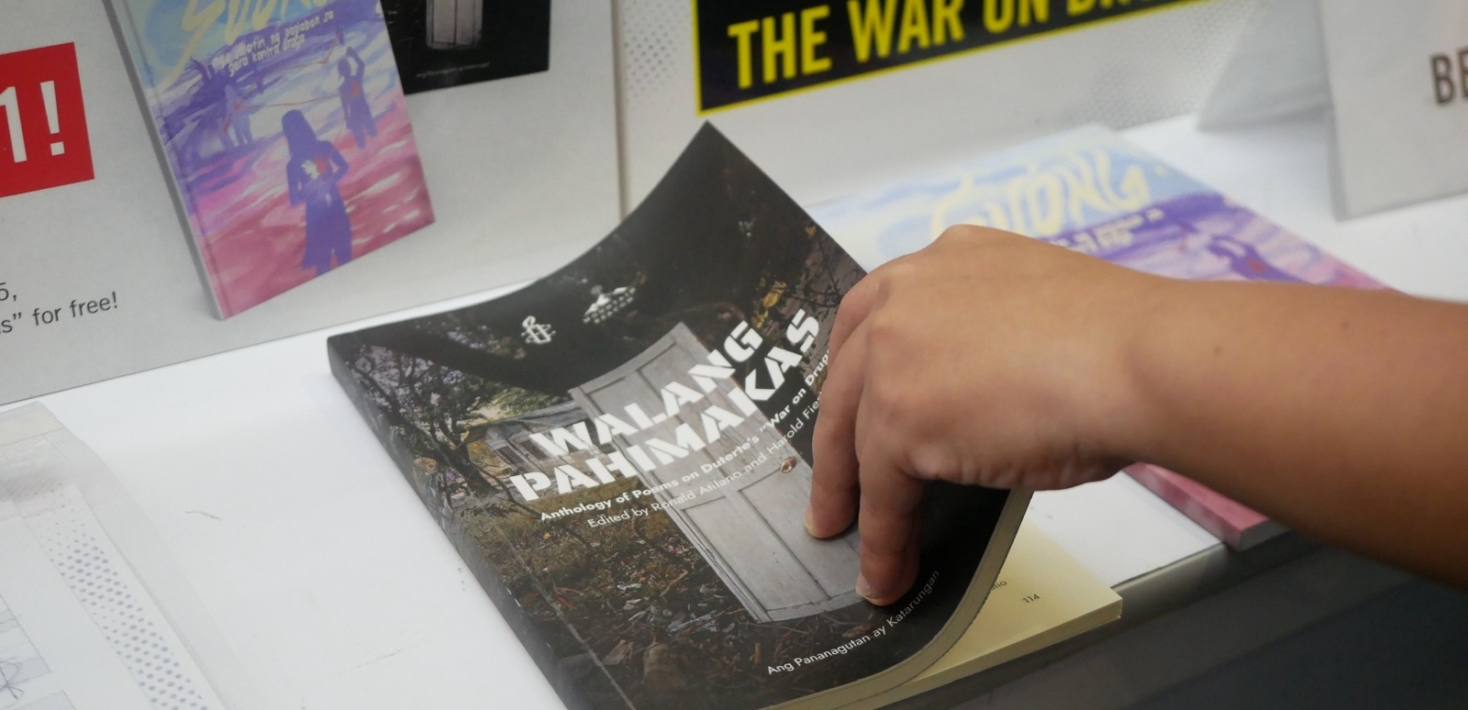
First unveiled during the Manila International Book Fair (MIBF) in September 2026, Amnesty International Philippines launched its first ever published book, “Walang Pahimakas” (No Farewell: Anthology of Poems on the “War of Drugs” during a press conference led by Secretary General Agnès Callamard on 20 November, ten days before the International Criminal Court (ICC) opens the trial of former President Rodrigo Duterte in The Hague.
“Walang Pahimakas brings together the victims of Duterte’s bloody ‘war on drugs’ and their families with Artists for Amnesty and human rights defenders to challenge disinformation surrounding the ICC’s role in pursuing justice for the victims and demand accountability for the culture of impunity that has plagued the Philippines for so long. As the families approach a pivotal moment in their pursuit of international justice, it is also a very opportune time to welcome back Agnès Callamard, now Amnesty’s Secretary General, who was first barred in the country for her work on extrajudicial killing, a practice that proliferated during Duterte’s reign of terror,” said Ritz Lee Santos, III, Section Director of Amnesty International Philippines.
“Walang” Pahimakas brings together the victims of Duterte’s bloody ‘war on drugs’ and their families with Artists for Amnesty and human rights defenders to challenge disinformation surrounding the ICC’s role in pursuing justice for the victims and demand accountability for the culture of impunity that has plagued the Philippines for so long. As the families approach a pivotal moment in their pursuit of international justice, it is also a very opportune time to welcome back Agnès Callamard, now Amnesty’s Secretary General, who was first barred in the country for her work on extrajudicial killing, a practice that proliferated during Duterte’s reign of terror.
Ritz Lee Santo, III, Section Director
The anthology is a collection of poems that brings stories of the victims and their families to the forefront of the continuing fight for truth, accountability and justice. Thousands of Filipinos, mostly from poor and marginalized communities, were killed between 2016 and 2022 under the “war on drugs” policy. Amnesty International research has shown that many victims never reached the police precincts, nor the opportunity to face charges in a court of law. Their families have endured years of grief and uncertainty with no clear hope for justice.
“For years, families have waited for their loved ones’ stories to be heard and for those responsible to be held accountable. The fight for accountability and justice is not just about Rodrigo Duterte or others who face charges. Our collective struggle is to honor those whose lives were stolen and the families who, despite their situation, continue to believe in the fundamental principle that no one is above the law – not even senior government officials,” said Agnès Callamard.
Callamard, who led the launch, together with the families and literary artists, has worked on the situation in the Philippines for nearly a decade: first as UN Special Rapporteur on extrajudicial, summary or arbitrary executions, and now with Amnesty International, where she continues to support and stand in solidarity with the families of victims.
“In 2018, even as the Philippine government prevented me from carrying out my work with the UN, I continued to use my platform to ensure that the truth about the ‘war on drugs’ would see the light of day. The intimidation I experienced will never compare to what victims’ families went through. The authorities kept me out of the country, but they could never suppress the truth – that was kept alive by the families themselves. The victims’ voices will never be silenced. Organizations and individuals, especially artists, will make sure that we will remember,” Callamard added.
Amnesty International has also concluded that the widespread and systematic extrajudicial executions and other human rights violations committed in the context of the “war on drugs” reached the threshold of crimes against humanity. But the consequences of Duterte’s drug policy also extend beyond the killings, punishment and violence, including shaping how the government, even under President Ferdinand Marcos Jr., treats drugs suspects.
“Walang Pahimakas is a reminder that accountability must begin with recognizing the humanity of those whose rights were violated. Putting punitive measures before rehabilitation, and violence before duty of care, cannot continue to be the foundation of a policy that is supposed to be addressed as a public health issue. The Philippine government must move away from retributive anti-drug measures, and instead provide voluntary, evidence-based, age and gender appropriate services that respects human dignity and protect health and human rights. It must also address the stigmas and discrimination faced by people who use drugs,” Santos explained.
The book also confronts the narratives that helped normalize violence and obscure accountability. Terms such as “nanlaban” or resisted arrest, alongside presumption of regularity, were repeatedly used to justify police operations and condition the public to accept the killings to be legitimate.
“In a climate marked by fear and silencing critics, the written word becomes a means of restoring the truth. Walang Pahimakas is an act of remembering lives that were reduced to labels and statistics. Poetry cannot bring back those who were killed nor can it take away the trauma of losing a loved one in cold-blooded murder, but it refuses to let lives be forgotten. These poems remind us that behind every reported killing was a human being, and behind every victim was a family whose lives were forever changed,” editor and poet, Ron Atilano, said.
In a climate marked by fear and silencing critics, the written word becomes a means of restoring the truth. Walang Pahimakas is an act of remembering lives that were reduced to labels and statistics. Poetry cannot bring back those who were killed nor can it take away the trauma of losing a loved one in cold-blooded murder, but it refuses to let lives be forgotten. These poems remind us that behind every reported killing was a human being, and behind every victim was a family whose lives were forever changed.
Ron Atilano, "Walang Pahimakas" Editor
The involvement and support of National Artist for Literature, Virgilio Almario, as well as 70 others, has affirmed the role of Filipino artists and cultural workers in speaking truth to power. Artist support underscores the importance of art to confront injustice, resist repression and defend basic freedoms, to create and bear witness.
“When violence is made ordinary and silence becomes the expected response, writing becomes an act of resistance. Our poems challenge the myths that made the killings acceptable and confront the indifference that allowed it to continue. Remembering is looking back and insisting that what happened must be acknowledged, and those responsible be held accountable,” concluded co-editor and writer, Harold Fiesta.