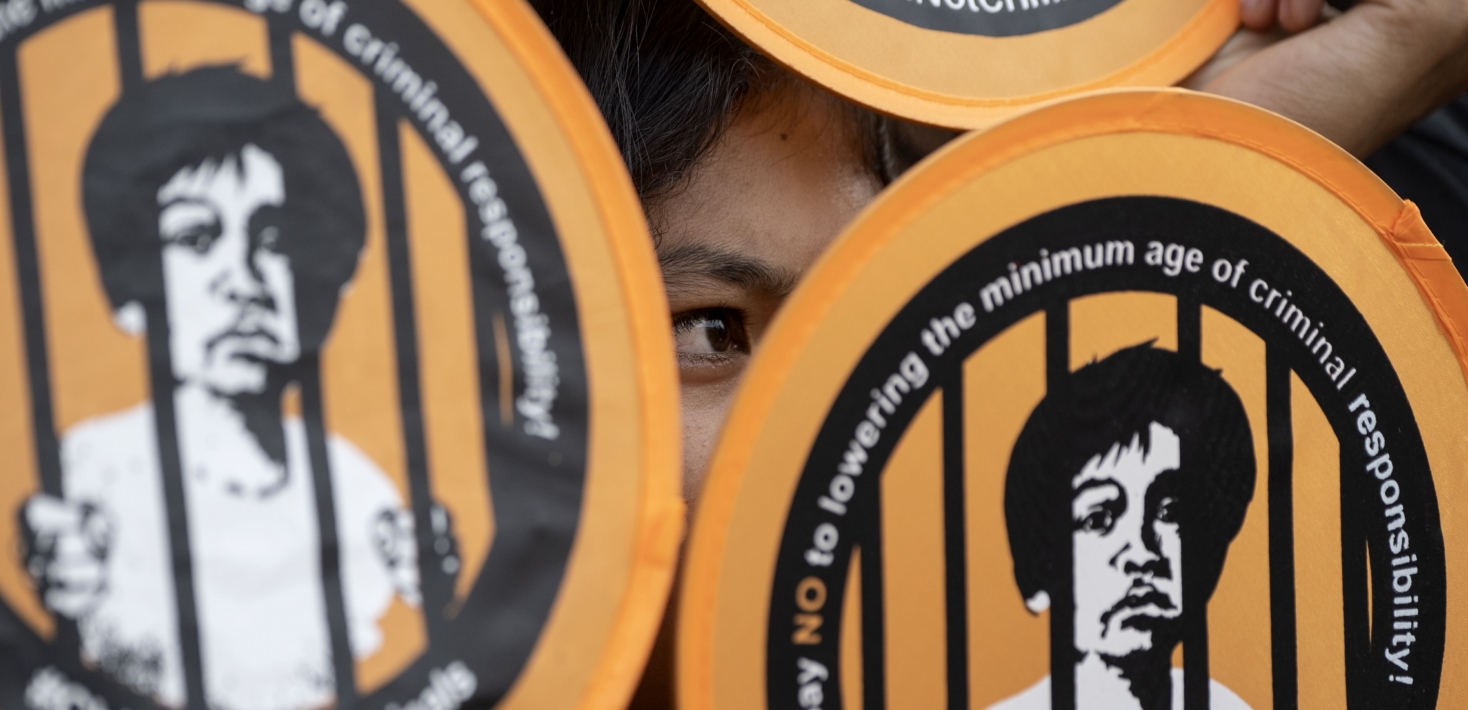


Responding to calls to lower the minimum age of criminal responsibility following the school shooting incident in Tacloban City involving two minors, Ritz Lee Santos III, Section Director of Amnesty International Philippines, said:
“Amnesty International Philippines is concerned that the shooting at San Jose National High School in Tacloban is being used to peddle disinformation about the Juvenile Justice and Welfare Act. Three children are dead, others were injured, and an entire school community has been traumatized. The priority now must be justice for the victims, urgent psychosocial support for survivors and witnesses, and a full, transparent investigation into how this type of violence took place in a school setting.
This tragedy must not be exploited to revive failed and dangerous proposals to lower the minimum age of criminal responsibility or further weaken the Juvenile Justice and Welfare Act. Such knee-jerk reactions fail to address the root causes of harm and places more children at risk.
Ritz Lee Santos III, Section Director of Amnesty International
“This tragedy must not be exploited to revive failed and dangerous proposals to lower the minimum age of criminal responsibility or further weaken the Juvenile Justice and Welfare Act. Such knee-jerk reactions fail to address the root causes of harm and places more children at risk. The Juvenile Justice law exists because children must be treated differently from adults in ways that prioritize rehabilitation and accountability appropriate to their age.
“Contrary to false claims, children in conflict with the law are still held accountable for unlawful acts under the Juvenile Justice Act based on the Convention on the Rights of Child (CRC) framework, which is not the same punishment given to adult suspects or accuse and People Deprived of Liberty (PDLs) in an adult criminal system. Exposing children to harsher punishment does not prevent them from committing crimes but it can only further harm and increase the likelihood of reoffending. Thus, lowering the age of criminal responsibility does not address the vulnerability of children to violence, nor will it prevent guns or knives from ending up in the hands of minors. When governments respond to social harm only through punishment, only the poor and vulnerable children are affected in most cases.
“The Tacloban school shooting did not also happen in a vacuum. It also reflects the consequences when culture of impunity is normalized. When children witness violence in their homes, communities, online spaces and even in public discourse, and see abuses often go unpunished, violence becomes acceptable in their eyes. The appropriate response is not to lower the minimum age of criminal responsibility, but to create stronger child protection systems, and sustain efforts to build culture of peace and respect for human rights.
“Legislators should stop looking for punitive shortcuts and start confronting the systemic failures the Tacloban incident exposed including gaps in child protection and weak psychosocial support in schools. Children who come into conflict with the law are often products of environments where protection and support mechanisms have failed. Therefore, it is reckless to respond to this tragedy by proposing harsher laws for children while failing to answer urgent questions on government accountability. The CRC is clear, states should not lower an existing minimum age of criminal responsibility if it is already set higher.
“Amnesty International Philippines calls on the 20th Congress to reject renewed attempts to lower the minimum age of criminal responsibility and instead invest in evidence-based measures that protect children and communities. The pursuit of justice for the victims of the Tacloban school shooting must never come at the expense of children’s rights. In moments of grief and public outrage, the government must resist punitive responses that have repeatedly proven ineffective and instead uphold its mandate to protect every child while ensuring accountability by upholding human rights standards.”
BACKGROUND
On 22 June 2026, a shooting at San Jose National High School in Tacloban City left three students dead and several injured. The authorities arrested two suspects aged 14 and 15, both students of the same school. While the circumstances surrounding the incident remain under investigation, some groups have renewed calls to lower minimum age of criminal responsibility. Under the Juvenile Justice Act, children aged 15 and below are exempt from criminal liability, while those above 15 but below 18 may be held accountable if proven that they acted with discernment, with emphasis on rehabilitation rather than punitive measures.