

Press Release
Baguio City – Amnesty International Philippines today warned of a widening gap in human rights protection across Luzon due to systemic violations as the organization presented the Philippine entry to its State of the World’s Human Rights Report 2025/26 during the Luzon Leg, the first stop of its rolling launch held in Baguio City.
“We want to highlight a pattern of escalating human rights violations in Luzon, from aerial bombardments of indigenous and civilian communities and unresolved cases of enforced disappearances to attacks on press freedom and labor rights, and the worsening effect of climate disasters in the region. Luzon is in a protection and accountability crisis,” said Philippine Section Director, Ritz Lee Santos, III.
While Amnesty recognizes the efforts of the Baguio City local government and the Commission on Human Rights – CAR in ensuring a right-based approach to governance, the rest of Luzon seems lagging. The organization raised a number of human rights concerns in the regions.
Luzon is in a protection and accountability crisis. Key human rights issues in Luzon reflect a broader pattern where accountability remains absent, and LGUs fall short with its obligations to address violations.
Ritz Lee Santos, III, Section Direction
“Key human rights issues in Luzon reflect a broader pattern where accountability remains absent, and LGUs fall short with its obligations to address violations. Amnesty International Philippines would like to emphasize our concern on the increasing militarization in Occidental Mindoro affecting the Mangyan community, with reports of aerial bombing that killed three children and a visiting researcher from a university in Manila. Community organizer Chantal Anioche was also reported missing after the attacks in 2026 following a pattern of escalating violence against the indigenous community since 2025,” Santos added.
Amnesty International Philippines also said that local human rights groups reported that Kalinga suffers the same level of militarization due to counter-insurgency measures of the AFP. Aerial attacks were conducted in the barangays of Pinukpuk, Kalinga in November 2025. And despite military claims that armed encounters were distant from civilians, independent human rights monitoring of the areas remains significantly constrained.
“The Aerial bombardment of a civilian indigenous community, that killed children and displaced nearly 800 people, constitutes a grave violation of international humanitarian laws, specifically the principles of distinction, proportionality, and civilian protection under the Geneva Conventions. There is no justification for the killing of children and the failure to secure civilian communities and indigenous areas,” Santos stressed.
The organization also raised the issue of enforced disappearances in the region, noting that despite legal remedies, cases remain unresolved. Amnesty pointed out the issuance of the writs of amparo by the Supreme Court in the cases of Jonas Burgos, Dexter Capuyan, and Bazoo de Jesus signifies judicial recognition of State acquiescence for their disappearance, yet, without prosecution, families of the desaparecidos are left without justice.
“Families continue to press for accountability by elevating appeals to the higher courts looking for stricter enforcement. And although the Philippines is the first in Asia to pass an anti-disappearance law, no convictions have been secured to date. The situation is the same for press freedom which continues to deteriorate, with the conviction of Frenchie Mae Cumpio after six years in detention. This is what justice looks like in the Philippines,” Santos lamented.
These cases reflect a broader practice in which anti-terror laws are used to target human rights defenders and journalists alike to silence dissent. Amnesty also reiterated that persistence of the practice of red-tagging across Luzon leads to real harm in order to inflict fear. Red-tagging is a direct threat to the freedom of expression of all Filipinos. It endangers not just those participating in social justice or development work, but anyone arbitrarily deemed “anti-government.”
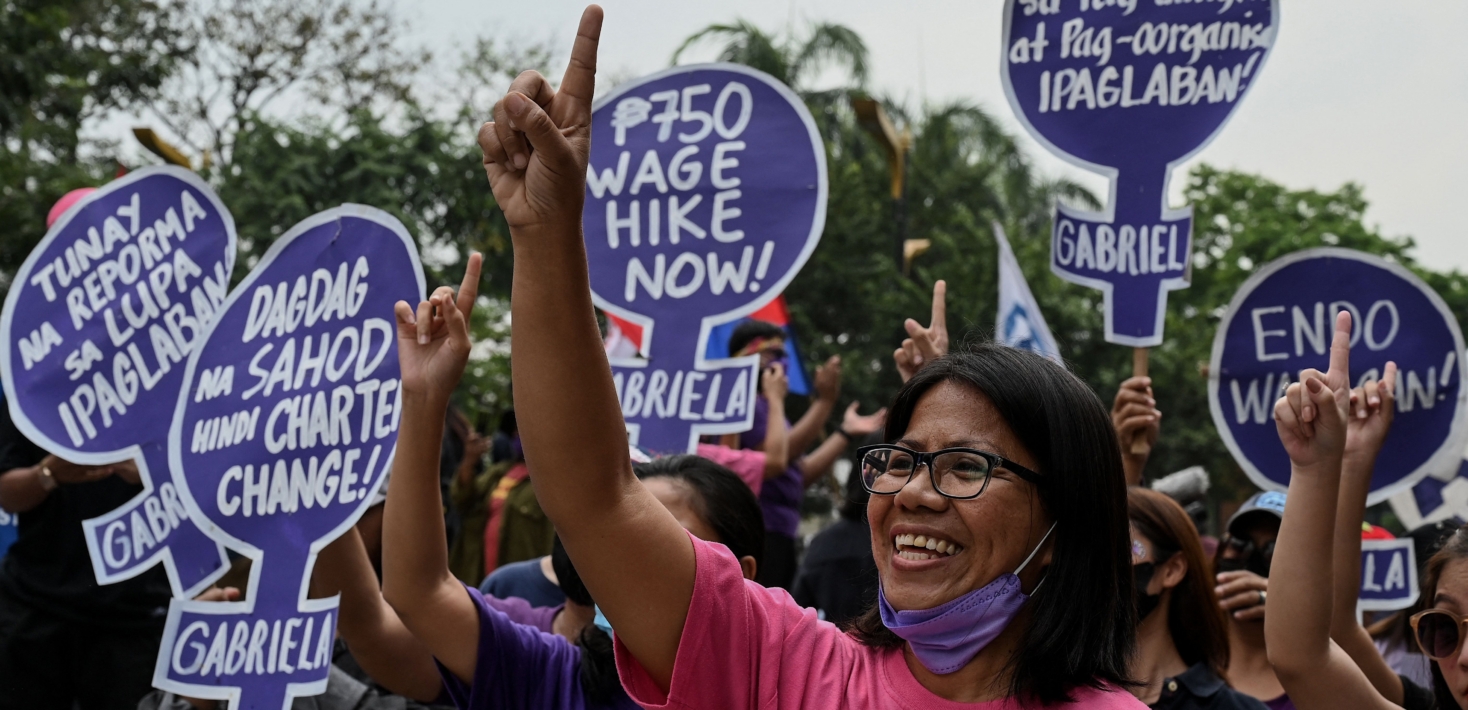
“While the labeling of activists continues to happen, we also see a surge in cases of labor rights violations. Some union leaders are also being red-tagged simply for demanding minimum wage increases to support the cost for a decent living. Workers are being punished by businesses for demanding what is already guaranteed by law. They should not have to go on strikes nor be harassed for demanding what’s legally theirs. Imagine workers of Kowloon House securing only a P40 increase, and then losing their jobs for it, or barangay health workers in remote areas receiving as little as P50 per month. Fifty pesos can barely buy a kilo of rice. This amount of increase is not a win, it is an insult,” added Santos.
Luzon is not only distraught by civil and political rights violations, but communities are also bearing the brunt of the climate crisis. Some farmers are also experiencing land grabbing while struggling to protect their livelihoods from the weakening ecosystem due to precarious weather conditions. Amnesty emphasized that land rights and climate vulnerability are also converging to displace entire communities who are also mostly already marginalized.
“Around 200 farmers in Camarines Sur face eviction from lands that their families have cultivated for lifetimes. This follows court rulings that were issued in cases where the farmers themselves were never made parties. At the same time, climate-related disasters continue to displace thousands, including people affected by severe storms during 2025 in the Cordilleras. While farmers are being pushed out of their lands, many communities are forced to flee due to climate disasters. These may be separate crises, but we only have one government with the capacity to address it had the taxpayers’ money been used appropriately for public good, not personal gain,” said Santos.
Amnesty International Philippines reiterated their calls and recommendations to the government through the Human Rights Legislative Agenda for the 20th Congress first presented to President Ferdinand Marcos Jr. in 2022. The organization said that they haven’t received a formal response from the Office of the President since, aside from the general statements issued annually by the Presidential Human Rights Commission (PHRC) as a response whenever the Philippine entry to their annual report is shared with the OP. Malacañang recently responded via email that the President is unable to accommodate Amnesty’s request.